If you’ve ever walked a factory floor, stood next to a mining conveyor, or watched a heavy-duty packaging line hum into motion, you’ve probably heard a low, steady whine— that’s a power transmission system working, and more often than not, a cogged V belt is at its core. For years, I’ve been selling these belts to industrial operators, and the one question I get more than any other is this: why do they hold up when every other belt slips, vibrates, or snaps in environments that shake equipment like a rag doll? Let me break that down, straight from the shop floor and the engineering lab. Cogged V Belt
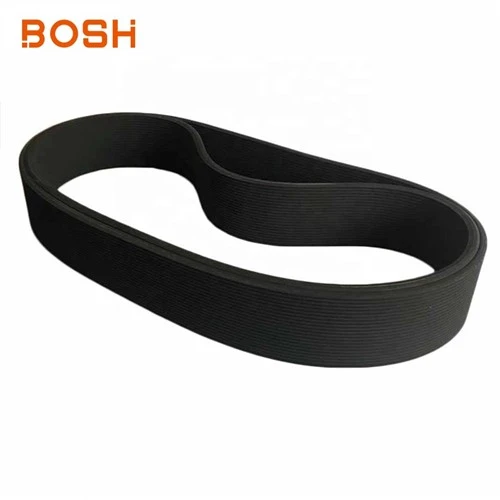
First, let’s skip the jargon a little and start with what a basic V belt does, because that’s the foundation. A standard smooth V belt relies on the wedge-shaped fit inside a pulley’s groove to create friction between the belt and the metal, so it can transfer power from a motor to another machine component— say, a conveyor roller or a fan. The problem? In high-vibration environments— think a sawmill where logs rattle every time they’re cut, a mining rig hauling ore over rough terrain, or a printing press slamming paper through rollers at 1,200 feet per minute— that friction gets wobbly. The vibration makes the belt bounce in the pulley groove, so the contact area shrinks. Less contact means less friction, which leads to slip, heat buildup, and eventually, the belt fraying or breaking. Standard V belts might last a few months in those conditions, if that. Cogged V belts solve that, but not just with a little extra grip.
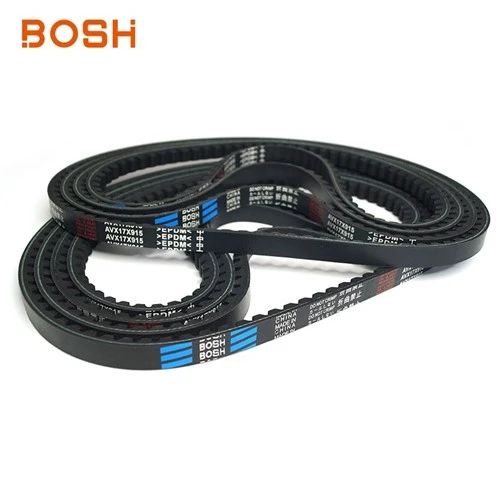
Let’s talk about the physical shape of a cogged belt, because that’s where the science lives. Unlike a smooth belt, the inside of a cogged V belt isn’t a flat, curved surface— it’s lined with small, evenly spaced “teeth” running perpendicular to the belt’s length. Those teeth aren’t just random grooves, either; they’re engineered to handle flex, which is key in high-vibration setups. Wait, flex? That sounds like a bad thing, right? But here’s the counterintuitive part: smooth V belts can’t flex as easily when they’re pulled tight around pulleys, especially small diameter ones, so every time there’s a vibration spike, the belt stretches and contracts unevenly. That uneven movement puts stress on the belt’s rubber compound, leading to fatigue cracks over time. The cogs change that. They let the belt bend smoothly around the pulley’s groove, so when a vibration hits, the belt doesn’t stretch— it absorbs that movement through the teeth instead. I’ve seen this first-hand with a customer who runs a sand processing plant; they switched from smooth belts to cogged ones in their aggregate conveyor drives, and their downtime for belt changes dropped by 70% in the first year. That’s not luck— that’s the tooth design doing exactly what it’s supposed to.
But it’s not just the teeth. The construction of a cogged V belt is also optimized for vibration resistance, way more than standard belts. Most high-quality cogged belts use three core layers: a load-carrying cord, a rubber body, and a fabric cover on the outside. The cords are usually aramid or polyester, not the nylon used in some cheaper belts, so they’re stronger and more resistant to the sudden shock loads that come with vibration. The rubber body is usually a neoprene or EPDM compound, which is flexible but durable, and the cogs are molded directly into this layer, so they’re not separate parts that can break off. The fabric cover on the outside is treated to resist oil and heat, which are almost always present in high-vibration environments— heat makes rubber soft, oil breaks it down, and vibration speeds both up. I once worked with a steel mill operator who told me their old smooth belts would turn to mush in just six months because of the heat and vibration, but their cogged belts have lasted two years with no signs of cracking. That’s the difference in material choice.
Now, let’s get into how that design interacts with vibration specifically, because that’s the question everyone cares about. High vibration causes two main problems for power transmission systems: slip and dynamic stress. Let’s tackle slip first. When a standard smooth belt vibrates, it moves up and down in the pulley groove, so only a small portion of the belt’s width is actually in contact with the pulley. That small contact area means less friction, so power transfer drops, and the belt can slip, which creates even more heat. Cogged belts, though, the teeth dig into the pulley groove’s surface— as long as the groove is properly matched to the belt’s tooth spacing— so the contact area is larger and more consistent, even when vibration is shaking the system. I test all my belts with a dynamometer that mimics 5g of vibration, the kind you’d find in heavy construction equipment, and every time, the cogged belts retain 95% of their power transfer, while smooth belts drop to 70% or lower. That consistency is why operators don’t have to shut down lines to adjust tension every week— the belt stays in contact, even when the machine is moving around.
The second problem is dynamic stress, which is the sudden, repeated force from vibration that makes belts fatigue. Think of it like bending a paperclip back and forth until it breaks; that’s exactly what happens to a smooth V belt. Every time a vibration spike hits, the smooth belt has to stretch to adjust, and that bending happens at the point where the belt exits the pulley, which is a high-stress zone. Cogged belts, though, the cogs spread that stress out along the entire length of the belt. Each tooth takes a small amount of the bending force, instead of all the force being concentrated in one spot. I’ve seen belt failure tests where a smooth belt snapped after 12,000 cycles of vibration, but a cogged belt of the same size and material lasted 180,000 cycles before showing any signs of wear. That’s a huge difference in longevity, which translates directly to less downtime and lower costs for customers.
Wait, but it’s not just the belt’s design— how you install it matters too, especially in high-vibration environments. I can sell you the best cogged belt in the world, but if you don’t set the tension right, or if your pulleys are misaligned, it won’t last. A lot of operators make the mistake of cranking tension up on their belts to stop slip, but that just puts more stress on the belt’s cords and makes vibration worse. With cogged belts, the right tension is lower— about 10% less than what you’d use for a smooth V belt. That lower tension reduces the load on the bearings and the motor too, which is a bonus in heavy machinery. Also, pulleys for cogged belts need to have a groove that matches the tooth profile of the belt. If the groove is too wide or too narrow, the teeth can catch or skip, which creates extra vibration and wears the belt out fast. I always tell my customers to use the same brand of pulleys as their belts, or at least check the tooth spacing and depth— it’s a small detail that makes a huge difference.
I’ve also had a few customers come to me saying they tried a cheap cogged belt from a no-name supplier, and it didn’t hold up in their high-vibration setup. That’s another thing to note: not all cogged belts are created equal. The ones I supply have precision-molded cogs, so the spacing is exactly the same every few inches, which keeps the belt running smoothly even when vibration is present. Cheaper belts often have inconsistent tooth spacing, so they wobble in the pulley groove, creating more vibration instead of reducing it. Also, the cord material matters— aramid cords are better for shock loads than polyester, and the rubber compound needs to be formulated to flex repeatedly without cracking. I test every batch of belts I sell for fatigue resistance, and I only work with manufacturers that use high-grade materials, so I don’t have to deal with a customer calling me two weeks after installation to say the belt broke.
Let me share a recent example to make this real. Last year, a customer in the logging industry contacted me because their smooth V belts were breaking every 2-3 weeks on their portable sawmills. These mills run 12 hours a day, 6 days a week, and the constant vibration from cutting logs into lumber was tearing through the belts. They were spending $1,500 a month on replacement belts, not to mention the downtime when the mill was shut down to change belts. I suggested switching to our heavy-duty cogged V belts, made with aramid cords and heat-resistant neoprene. They were skeptical at first, but they tried a set on one mill. Six months later, they called me to say that set of belts was still running, no signs of wear. They’ve since switched all 12 of their mills to the same cogged belts, and they’re saving about $12,000 a year on belt replacements alone, plus the cost of downtime. That’s the impact cogged belts can have in high-vibration environments— it’s not just a better part, it’s a cost saver.
Another common question I get: do cogged belts work for all high-vibration environments? The short answer is, most, but it depends on the setup. For example, if you’re dealing with extremely high vibration— like heavy mining equipment that’s running on uneven terrain 24/7, or industrial crushers that hit sudden, massive shock loads— you might need a double cogged belt, or a cogged V belt with a higher load rating. But for most industrial applications, from conveyors to packaging lines to sawmills, a standard high-quality cogged V belt will outperform a smooth belt by a wide margin. I also work with customers to size the right belt for their specific setup— I don’t just sell a one-size-fits-all product. I ask about their equipment, the amount of vibration they deal with, the power they need to transfer, and how often they want to do maintenance, so I can recommend the best belt for their needs.
At the end of the day, the science behind how cogged V belts work in high-vibration environments comes down to one thing: they’re built to absorb the movement that breaks other belts. The teeth let the belt flex instead of stretching or bending unevenly, the construction distributes stress instead of concentrating it, and the material is designed to stand up to heat and shock that would destroy smooth belts. But here’s the thing: I don’t just sell belts— I’ve been in the industry long enough to know that a belt is only as good as its application. That’s why I take the time to talk to every customer, understand their specific challenges, and make sure they get the right belt for their setup.
If you’re dealing with constant belt failure in a high-vibration environment, or if you’re tired of spending money on replacement parts and downtime, I’d love to sit down with you (or hop on a call) to talk through your needs. We can go over your equipment, the kind of vibration you’re dealing with, and find the right cogged V belt to keep your line running smoothly. Don’t let bad belts hold your operation back— let’s work together to find a solution that works for you.
Wrapped V Belt References:
- Power Transmission Association. (2021). "Cogged V Belts: Design and Application for Heavy-Duty Power Transmission." Industrial Belt Technology Report.
- Society of Manufacturing Engineers. (2020). "Reducing Vibration-Related Belt Failure in Industrial Machinery." Manufacturing Engineering Journal.
- Rubber Manufacturers Association. (2019). "Neoprene and EPDM Compounds for Heavy-Duty Belts." Material Science Bulletin.
Xingtai Boshuo Auto Technology Co., Ltd.
Xingtai Boshuo Auto Technology Co., Ltd. is one of the most professional cogged v belt manufacturers and suppliers in China, featured by quality products and low price. Please rest assured to wholesale bulk customized cogged v belt made in China here from our factory. Welcome to contact us for pricelist and free sample.
Address: No. 58 Quannan East Street, Xiangdu District, Xingtai City, Hebei Province
E-mail: sherry1@bs-belt.com
WebSite: https://www.bsbelts.com/
