If you’ve ever stood in a plant control room mid-shift, watching a critical process line stutter to a halt because a pump seized out of nowhere, you know how costly a small installation error can be. As someone who’s spent the last 12 years working directly with manufacturing, maintenance, and operations teams as a pump parts supplier, I’ve seen the aftermath of misaligned pump components enough times to know that “proper alignment” isn’t just a technical buzzword—it’s the line between a pump that runs for years on end and one that wastes energy, breaks down prematurely, and stalls entire production schedules. Today, I want to break down why getting that alignment right matters, how it shows up in real-world applications, and what teams can do to avoid the avoidable mistakes that too often derail pump performance. Pump Parts

First, let’s ground this in a little basic science, because alignment isn’t just about tightening bolts—it’s about the way moving components interact. Every pump has two core rotating assemblies: the pump shaft, which connects the impeller (the part that moves fluid) to the driver (usually an electric motor or engine), and the bearings that support that shaft. When these two assemblies aren’t aligned—meaning their central axes don’t line up perfectly, either angularly (one shaft is tilted relative to the other) or parallel offset (one shaft is shifted horizontally or vertically away from the other)—several immediate things go wrong. The first is increased friction between rotating parts. Even a tiny misalignment, often measured in thousandths of an inch, creates side loads on the pump shaft that bearings aren’t designed to handle. Those side loads force bearings to work harder than intended, generating excess heat, wearing out raceways and rolling elements faster, and leading to premature bearing failure. I’ve had customers call me in a panic because their pump bearings seized just 6 months after installation, only to pull the parts and find that the misalignment from the initial setup had eaten through the grease and burned out the bearing’s internal components. That’s not a manufacturing defect—that’s an installation error that could have been fixed in 15 minutes with a basic alignment tool.
Beyond bearing failure, misalignment hits energy efficiency hard, and that’s a cost that adds up fast for any operation. A 2022 study from the Hydraulic Institute, a global trade group focused on fluid handling equipment, found that even 1 degree of angular misalignment between a pump and its driver can increase energy consumption by up to 10%. For a mid-sized industrial pump running 24/7 at 3600 RPM, that translates to thousands of dollars in unnecessary electricity costs every year. Let’s do a quick example: a common centrifugal pump used in municipal water treatment, running 8,760 hours a year, with a motor efficiency of 95% and electricity costs of $0.10 per kWh. If that pump is misaligned just 0.5 degrees, leading to a 5% efficiency loss, that’s over $2,000 a year in wasted energy. Multiply that across 10 pumps in a facility, and you’re looking at $20,000 a year thrown out the window—all because someone skipped a final alignment check after bolting parts together. I’ve had a food and beverage customer tell me that after we helped them redo the alignment on 8 pump units, their monthly electricity bill for that process dropped by 12%. That’s not a marketing claim—that’s real money saved because of a tiny, often-overlooked step in installation.
Then there’s the impact on the pump’s core component: the impeller. The impeller is the part that moves fluid, and its performance depends on being perfectly centered inside the pump casing. If the impeller is misaligned relative to the casing, it creates clearance gaps that are uneven around the circumference. When fluid flows through the pump, it pushes harder on one side of the impeller than the other, creating what’s called “radial thrust.” That uneven force doesn’t just add more load to the shaft and bearings—it can also cause the impeller to rub against the casing, leading to wear on both parts, decreased flow rate, and even cavitation in severe cases. Cavitation is when low pressure zones in the flowing fluid create tiny vapor bubbles that collapse violently, sending shockwaves through the pump. Add misalignment to that, and those shockwaves are amplified, eroding the impeller and casing far faster than normal. One of my water treatment clients came to me with a pump that was only a year old, and their flow rate had dropped by 18%. When we pulled the impeller, we found that half the outer edge had been worn down by rubbing against the casing, all because the initial install team had skipped checking the impeller-to-casing clearance after mounting the parts. They’d focused only on aligning the motor to the pump shaft, and missed the internal alignment of the rotating assembly. That’s a common mistake—teams often equate “pump alignment” to motor-pump shaft alignment, but it extends to every internal moving component.
Sound level and vibration are often the early warning signs of misalignment, but they’re also costs in their own right. Misaligned components create consistent, excessive vibration that travels through the pump skid, the piping connected to the pump, and even the surrounding structural elements. In industrial settings, that vibration can cause pipe joints to leak, mounting bolts to work loose over time, and even damage adjacent equipment. For facilities working in sensitive areas—like pharmaceutical plants, where contamination risks are high, or residential areas near water treatment sites—excess noise from misaligned pumps can also lead to regulatory complaints or operational disruptions. I had a customer in the chemical processing industry that got three noise complaints in a month from a neighboring facility. When we tested their pumps, we found that one had a vibration level three times the industry standard, all due to minor angular misalignment that had developed over six months. Adjusting that alignment cut the noise level enough to resolve the complaints, and also extended the pump’s expected lifespan by an estimated 5 years. The vibration not only disturbs the surrounding area—it also wears on the pump itself, turning a minor issue into a major repair job.
Now, let’s talk about why misalignment happens so often, because it’s rarely malice or ignorance—it’s usually a combination of time pressure, outdated tools, and miscommunication between teams. Many maintenance or installation crews are working with tight schedules; a plant might have a production line down, so the team rushes to swap in new pump parts, tightens the bolts, and calls it a day without a proper alignment check. Others rely on old-school methods like “eye-balling” alignment or using a straight edge, which are prone to human error—even experienced technicians can misjudge thousandths of an inch. I once watched a senior tech who’d been working with pumps for 20 years align a pump using only a straight edge, and he was off by 0.02 inches. That’s a tiny amount, but over time, it leads to wear that reduces pump life by 50% or more. Also, misalignment often creeps in after installation, too. Pipe stress—when the piping connected to the pump is installed incorrectly, pulling on the pump’s flanges—can shift the pump shaft over time, creating misalignment months after the initial install. That’s why post-installation alignment checks, and regular maintenance checks every 6 months or so, are just as important as the initial setup.
As a pump parts supplier, I work hand-in-hand with customers to make sure they have the right parts for the job, but I also prioritize educating them on how to install those parts correctly. Too often, customers buy parts from a supplier and assume that the parts alone will perform well, but installation is half the battle. We get calls all the time from customers who say “your pump parts failed,” only to troubleshoot and find that the parts were installed with misaligned shafts, worn mounting pads, or incorrect clearance between rotating components. That’s not a part defect—it’s an installation error, and it’s something we help customers fix by providing step-by-step alignment guides, recommending basic tools like dial indicators (the gold standard for precision alignment), and even offering on-site alignment consultations for high-criticality pumps.
Let’s also address a common myth: some teams think that minor misalignment is acceptable, as long as the pump runs. But the data doesn’t lie. The Hydraulic Institute’s research, along with studies from the US Department of Energy, shows that even small misalignments (less than 0.005 inches for parallel offset) lead to measurable increases in energy use, wear, and failure risk. For pumps that run 24/7, that minor misalignment adds up to thousands of dollars in costs over the pump’s lifespan, which is usually 10 to 15 years if maintained properly. I’ve seen pumps that were aligned correctly last 18 years without a major rebuild, while identical pumps in the same facility that were aligned poorly needed a full rebuild every 4 years. The difference isn’t the parts—it’s the alignment.
So what can teams do to make sure they’re getting alignment right? First, prioritize precision tools over guesswork. Dial indicators, laser alignment tools, and gap gauges are worth the investment, because they give accurate, measurable data instead of relying on eyesight. Second, follow manufacturer guidelines for clearance and alignment—every pump model has specific tolerances for shaft alignment and internal impeller clearance, and deviating from those guidelines is a fast track to problems. Third, build alignment checks into your installation and maintenance routines. Don’t wait for a pump to fail to check alignment; do it right after installation, after any major part replacement, and during regular maintenance shutdowns. Finally, don’t hesitate to reach out to suppliers for help. A good pump parts supplier isn’t just selling you a component—they’re a partner, with experience across hundreds of installations in different industries, who can help you avoid the mistakes that lead to unnecessary costs and downtime.
At the end of the day, proper alignment is a small step that has outsized impacts on pump performance, operational costs, and equipment lifespan. I’ve been in this industry long enough to know that when a pump runs smoothly, it doesn’t just save money—it takes a huge amount of stress off plant teams, who don’t have to worry about unplanned breakdowns mid-shift. It means production lines keep running, energy bills stay manageable, and maintenance teams can focus on proactive work instead of emergency repairs.
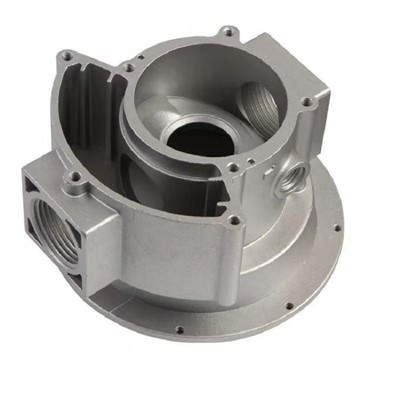
If you’re dealing with pump performance issues, or looking to replace parts and want to make sure your next install is done right, don’t hesitate to reach out to our team for guidance on alignment, parts selection, or installation best practices. We’re here to help.
Fan Impeller References:
Hydraulic Institute. (2022). Pump Alignment Best Practices for Industrial Fluid Handling. Hydraulic Standards Council.
U.S. Department of Energy. (2021). Improving Pump System Efficiency: A Guide for Industrial Facilities. Energy Efficiency and Renewable Energy Office.
Shandong Shunye Stainless Steel Co., Ltd.
Address: Shandong Province, Binzhou City, Wudi County, Liubao Town, Zhangdong Road, Duliucun Village
E-mail: sales@wdshunye.com
WebSite: https://www.shunyecasting.com/
