If you’ve ever stood in front of a production line where an electric motor suddenly cut out, you know how much downtime costs—lost output, missed deadlines, and emergency repair bills that can spiral fast. As a supplier of electric motor bearings for over a decade, I’ve fielded hundreds of calls from plant managers, maintenance supervisors, and even fellow engineers panicking over failing bearings, and the number one question I hear is: “How do I get technical support that doesn’t waste time or fix the wrong problem?” Electric Motor Bearings
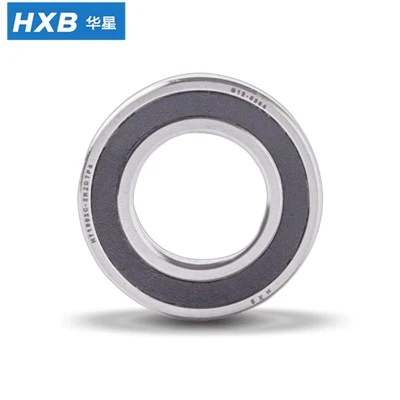
Too many people reach out to generic support lines, get passed between departments, and leave with advice that doesn’t apply to their specific motor, load, or environment. That’s why I wanted to pull back the curtain on how to access meaningful technical support—from a supplier who specializes in electric motor bearings, not just any bearings. Let’s break down what works, what to avoid, and how to make the most of the experts who know your product inside and out.
First, stop guessing and start with the basics: you can’t get good support if you can’t answer the right questions. Most calls I take start with, “My 50-horsepower motor’s bearings are failing, what do I do?” That’s a start, but it’s missing critical details that will make the difference between a quick fix and a repeat failure. When you’re ready to reach out to your bearing supplier, be prepared to share these specifics:
The full motor and bearing part number. This isn’t just the series number—it’s the part number stamped on the bearing itself, and the model number of the electric motor it’s installed in. For example, a deep-groove ball bearing might have a number like 6210-2RS, but if you’re using it in a 200-hp horizontal motor vs. a 10-hp fan motor, the technical considerations are night and day. I once had a customer who swapped a standard 6208 bearing for a higher-load version and kept wondering why it still failed until he pulled the right numbers—turns out his application needed a C3 clearance instead of standard, and a pressed-on inner ring vs. loose fit. Getting these numbers upfront cuts out hours of back-and-forth.
Application and operating conditions. Tell the support team what the motor powers: is it a conveyor belt, a pump, a HVAC fan, or a industrial mixer? What’s the load it carries—constant, variable, or shock? How hot is the environment? If it’s in a steel mill, where temperatures regularly hit 120°F and there’s dust and moisture, a standard bearing won’t work. I had a food processing customer who installed standard bearings in a motor for a meat grinder, only to have them fail in six months from frequent washdowns. We switched to a food-grade, sealed bearing with a corrosion-resistant coating, and that problem went away. Also, share the motor’s operating speed—RPM matters a lot for bearing life; high-speed motors need different lubrication and clearance than low-torque, slow-speed units.
History of the failure. When did the issue start? What are the symptoms: noise (grinding, squealing, vibration?), overheating, leakage of lubricant, or the motor just shutting off? If you replaced bearings before, what type did you use, and how long did the last set last? This is huge. A customer recently told me his bearings were failing every three months, and at first I thought it was a quality issue with the bearings we supplied. But when he said the motor was running off-balance, we realized the root cause wasn’t the bearing—it was a misaligned shaft. Fixing the alignment made the new bearings last two years instead of three months. Technical support isn’t just about the part; it’s about solving the problem, so the failure history helps skip past trial and error.
Next, know who at your supplier to talk to. Not all support teams are the same. Some suppliers have first-line support that handles order tracking, delivery questions, and returns—they’re great for basic stuff, but if you need help with a failure, you want the technical support team, often called application engineering or technical services. When you call, ask to be connected to the team that works specifically with electric motor bearings, not the general industrial bearings group. Electric motor bearings have unique requirements: they handle radial and axial loads, operate with specific lubrication cycles, and are subject to stray electrical currents that can cause fluting (the weird pitting you see on bearing raceways from electricity). A general bearing expert might not know that, but a team that specializes in these parts will.
I also recommend bringing your maintenance team into the conversation if possible. Technical support works best when there’s two-way communication. Last year, a maintenance supervisor called me complaining his bearings were seizing too quickly. I asked him to send photos of the removed bearing, and he grabbed his foreman, who’d been on site for 20 years, to look at it. We saw that the lubricant had dried out, and the foreman mentioned they’d switched to a cheaper grease to cut costs. Our team recommended a high-temperature, long-life grease specifically formulated for electric motor bearings, and combined with adjusting the lubrication interval, the problem was solved. If the only person on the call is a purchasing agent who doesn’t know the day-to-day operations, you’ll miss that kind of detail.
Once you’re connected to the technical team, ask targeted questions, not just “fix my bearing.” Generic advice like “make sure lubricant is clean” is helpful, but for your specific application, you need specifics. Here are a few questions that work well for electric motor bearings:
-
“What’s the expected service life for the bearing I’m using in this motor, under these conditions?” Bearings have a rating called L10 life, which is the time 90% of identical bearings will last under ideal conditions. But real-world conditions (load, misalignment, contamination) shorten that. A good technical team will adjust that number for your application. For example, a 6205 bearing in a 10-hp fan motor might have a L10 life of 25,000 hours, but with shock loading from a conveyor, that drops to 10,000 hours. Knowing that helps you plan for replacements, not react to failures.
-
“How do I install and maintain this bearing correctly?” Even a high-quality bearing will fail if installed wrong. I’ve seen bearings destroyed because technicians hammered the outer ring instead of the inner ring during installation, or didn’t properly clean the shaft housing before fitting. A technical team can walk you through step-by-step installation, or even recommend tools (like induction heaters) to avoid damage. They can also tell you the right lubrication interval—too much grease is just as bad as too little, because it causes overheating. For example, open bearings might need lubrication every 6 months, while sealed bearings can last 2-3 years, depending on operating conditions.
-
“What upgrades or modifications can I make to prevent future failures?” Often, the fix isn’t just a new bearing—it’s a small change to your setup. Maybe switching to a bearing with better corrosion resistance, or adding an insulation washer to block stray electrical currents (which are super common in variable-frequency drive motors, a big cause of bearing failure these days). A customer in a mining operation was having issues with bearings in variable-speed motors, and our team suggested adding ceramic-coated bearings to block the electrical current that was pitting the raceways. That cut their failure rate by 90% in six months. Don’t just ask for a replacement—ask for ways to make the system better.
Now, what should you avoid? There are a few common mistakes that people make when seeking technical support for electric motor bearings. First, don’t wait until the motor is dead to call. By the time a bearing seizes, you’re already facing downtime, which puts the supplier under pressure to rush a solution. If you notice unusual vibration or noise, call early—we can help diagnose the issue before it becomes a full failure, and maybe even schedule a replacement during a planned shutdown instead of an emergency.
Second, don’t rely on internet forums or generic product pages. Anyone can post advice online, but electric motor bearings are not one-size-fits-all. A tip that works for a small household fan might ruin a large industrial motor bearing. If you get advice, verify it with your bearing supplier’s technical team. I’ve had customers tell me they swapped to a higher-load bearing based on a forum recommendation, only to find the higher load made the motor run hotter, which shortened bearing life. The internet is a great starting point, but not a replacement for expert advice tailored to your application.
Third, don’t forget to follow up after the support visit. A good supplier will help you implement their advice, but it’s up to you to track results. If you take the technical team’s recommendation for a new bearing, note how long it lasts, and share that feedback with them. We use that feedback to improve our own products and support—if a customer tells us that a certain grease works great in their application, we can pass that tip on to other clients with similar setups. It’s a two-way street.
As someone who’s spent years working with electric motor bearings, I’ve seen first-hand that good technical support isn’t just about fixing a problem—it’s about preventing problems. The best support teams will act as an extension of your maintenance department, not just a vendor who sells you parts. They’ll take the time to understand your specific operations, not just read off a spec sheet, and they’ll give you actionable advice that saves you money in the long run.
If you’re currently dealing with bearing failures, or you want to make sure your next bearing installation lasts as long as it should, reach out to our technical team. We specialize in electric motor bearings, so we know the unique challenges your application faces—from variable-frequency drive currents to harsh industrial environments to misalignment issues. We’ll work with you to get the right parts, install them correctly, and create a maintenance plan that keeps your motors running smoothly, with minimal downtime.
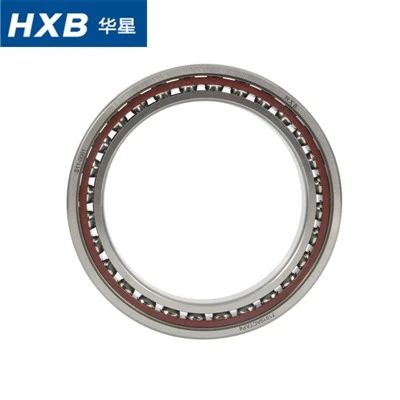
Together, we can turn bearing failures from a costly emergency into a manageable, scheduled part of your operations. Don’t wait for the next breakdown to get the support you need—let’s connect now to discuss your specific requirements.
High Speed Spindle Bearings References
- Harris, T. A., & Kotzalas, M. N. (2007). Rolling Bearing Analysis: Advanced Concepts of Bearing Technology (5th ed.). CRC Press.
- American National Standards Institute. (2019). ANSI/ABMA Standard 20: Load Rating and Life Ratings for Ball and Roller Bearings. American Bearing Manufacturers Association.
- Tallian, T. E. (1992). Bearing Failure from Electrical Discharge Machining (Fluting): An Update. Tribology Transactions, 35(3), 409-415.
- Shigley, J. E., Mischke, C. R., & Budynas, R. G. (2004). Standard Handbook of Machine Design (3rd ed.). McGraw-Hill.
- Food and Drug Administration. (2021). Design Considerations for Food-Contact Equipment, Chapter 5: Bearings and Seals. U.S. Department of Health and Human Services.
Hangzhou Huaxing Kechuang Holding Group Co., Ltd.
Hangzhou Huaxing Kechuang Holding Group Co., Ltd. is one of the leading manufacturers and suppliers of electric motor bearings in China, featured by quality products and good service. Please rest assured to buy bulk durable electric motor bearings from our factory. Welcome to view our website for more information.
Address: No.553 Yingbin Road, Linping, Hangzhou, 311100, China
E-mail: wmb@huaxingbearing.com
WebSite: https://www.hxbbearing.com/
