If you’ve ever worked with heavy-duty crushers, you know counterweights don’t get enough shine—until the day one cracks, slips, or makes that weird, rattling noise that ruins your entire shift. I’ve been supplying crusher counterweights for 8 years now, and let me tell you: 90% of the issues my clients call me about aren’t from a bad product. They’re from skipping basic, no-fuss maintenance that takes 30 minutes a month max. No fancy tools, no engineering degree required. Just stuff I’ve picked up from hauling counterweights in my beat-up pickup and troubleshooting every possible failure you can name. Let’s break this down like we’re shooting the breeze over a coffee (or whatever you drink on site, no judgment if it’s that cheap gas station beer). Crusher Counterweights

First off, let’s get one thing straight: counterweights aren’t just dead metal blocks bolted to a crusher shaft. They’re the thing that balances the eccentric motion of the crusher head, stops excessive vibration, and keeps your bearings from wearing out twice as fast. I’ve had a client text me at 2 a.m. because their crusher was shaking so bad it shook a bolt loose from the control panel—turns out their counterweights had shifted a little over 6 months, and they never checked. That’s the kind of headache maintenance prevents.
The number one rule for counterweight upkeep? Don’t ignore the small stuff until it’s big. You don’t need to climb the crane every week (though for some of you guys, that’s your version of a workout, and I get it). But you do need to have a quick “check list” you knock out before every shift—like, when you’re waiting for the loader to show up, or while you’re waiting for a quick break. Let’s start with the visual stuff because that’s the easiest to catch. Grab a flashlight, climb up to the counterweight housing (use proper lockout-tagout, please—no one wants to get hurt because they skipped safety for a minute), and look for cracks. Not just big, spiderweb cracks—tiny ones too, the ones you might miss if you’re rushing. I’ve seen a crack so small you could barely see it with the naked eye turn into a full split in 2 weeks because the counterweight was bouncing around every time the crusher hit a big boulder.
Wait, how do cracks even happen? Most of the time it’s thermal stress—crushers get hot, metal expands, then cools fast after a shutdown, and that constant expansion and contraction creates tiny fractures. Or sometimes, you’re running material that’s way harder than the counterweight was designed for, so it’s taking extra impact. If you spot a crack that’s longer than your pinky, don’t mess around—swap the counterweight before it fails mid-shift. Smaller cracks? I’ve had clients grind them out and weld them, but only if the crack is superficial and not going all the way through the metal. If it’s a through-crack? Replace it. No exceptions. I once tried to patch a through-crack for a buddy, and 3 days later it flew off the shaft and took out a half of his feeder. Not worth saving a few hundred bucks on a part that costs 10 times that when it fails.
Next up: torque checks. This is the one most people skip, and it’s a crime. The bolts holding the counterweight to the shaft have a specific torque, right? But they loosen over time—especially the first few weeks of running a new counterweight. Vibration is a mother for loosening bolts. So how often do you check? I tell my clients to do a full torque check when they install a new counterweight, then again after 8 hours of running it (that’s the break-in period), then every 2 weeks after that for the first 3 months, then once a month after that. And don’t just “guess” how tight they are. Use a torque wrench. I’ve seen guys use a pipe wrench and yank on it, but that’s how you snap the bolt or strip the shaft threads. Every crusher is a little different, so check your manual for the exact torque spec for your model. If you lost the manual? Hit me up, I can get it for you.
Wait, what about locking mechanisms? Some counterweights use keyways, some use taper locks, some use lock washers, some use loctite. Whatever yours uses, you need to make sure it’s working. If your counterweight is a keyway style, check that the key isn’t worn down or sheared. I had a client last year who had a shear key fail because it was worn from 2 years of vibration, and he didn’t check it. The counterweight slid 2 inches off the shaft, and the crusher’s eccentric shaft bent. Cost him $15k in repairs and a week of downtime. That key is there for a reason—don’t skip checking it. For taper locks, make sure they’re not rusted or pitted, because that can make them slip too. I always recommend using high-quality lock washers or a good grade of loctite on the bolts if you’re not using a taper lock. Avoid that cheap, generic loctite from the auto parts store—get the stuff that’s made for high-vibration, heavy-industry use. It’s worth the extra $10.
Now, something you might not think about: balance. Wait, how do you balance a counterweight? Well, first, make sure you have the right counterweight for your crusher. I see so many clients grab a counterweight that’s almost the same size as their old one, but not quite, and wonder why their crusher is still vibrating. Every crusher has a specific required counterweight mass, right? Too light, and you get vibration; too heavy, and you put extra stress on the bearings. If you just replaced a counterweight and the vibration is worse, check the mass. I had a client who bought a cheap counterweight off Alibaba that was 20 lbs lighter than he needed, and his bearings wore out in 3 months. Total waste of money. If you’re not sure what size you need, send me your crusher model, I can hook you up with the exact specs.
Another balance thing: if you ever have to grind or repair a counterweight, don’t remove metal randomly. If you take 10 lbs off one side, you throw the balance off. That’s why I tell people to only grind small amounts if you have a real reason, and even then, check the balance after. You can buy a cheap balancer kit for small crushers, or I can come help you check it if you’re local. But for most guys, if you’re buying a counterweight from me, it’s pre-balanced, so you don’t have to worry about that part. Just don’t mess with it unless you really have to.
Rust and corrosion—this is a big one for guys running in wet, humid climates, or crushers that sit outside for weeks at a time. Counterweights are usually made of cast iron or steel, right? They’re tough, but they can rust, especially where the bolts go in, or on the edges where the coating chipped off. Rust makes the metal weaker, and it can make the bolts seize up so tight you can’t get them off when you need to replace the counterweight. How do you prevent this? First, when you install a new counterweight, make sure the coating is good. If there’s a chip in the paint or powder coat, touch it up. I always send my clients a spare can of the matching paint when I deliver a counterweight, for exactly this reason. Every 6 months, take a wire brush (or a sanding pad, if you want to be fancy) and scrub the bolts and the area around the counterweight where it meets the shaft. Then spray a little anti-seize on the bolts when you torque them down—this keeps them from seizing, and makes future torque checks way easier. I’ve had clients tell me they never use anti-seize, and their bolts are so rusted they had to use a torch to cut them off last time they had to change a bearing. Don’t be that guy.
Wait, what about when you’re not using the crusher for a while? Like, if you’re shut down for the winter, or for a long maintenance period. Don’t just leave the counterweight on the shaft and forget about it. I recommend removing the counterweight, cleaning it off, touching up any rust spots, and storing it in a dry place. If you can’t remove it, at least cover it with a tarp, and make sure the area around the shaft is free of debris and moisture. I had a client in Minnesota last year who left his crusher outside all winter, and his counterweight rusted so bad it was almost half as strong by spring. He had to replace it, which cost him extra money and downtime. Don’t do that to yourself.
Now, let’s talk about common mistakes I see all the time. First, waiting until something breaks to fix it. That’s like waiting until your car’s engine seizes to change the oil. It’s way more expensive. I have a saying: “A 30-minute maintenance session saves you $10k in repairs.” It’s true. Second, using cheap, off-brand counterweights. I get it, everyone wants to save money, but if you buy a counterweight that’s not cast right, or has uneven mass, or the bolts are cheap, you’re just asking for trouble. Third, skipping safety. Always lockout-tagout the crusher before you climb up to check the counterweight. Wear steel-toe boots, a hard hat, don’t rush. I’ve seen too many guys get hurt because they cut a corner on safety. Fourth, not keeping records. Write down when you installed the counterweight, when you torque checked it, when you had issues. That way, you can spot patterns—like, if every 6 months a bolt comes loose on the same side, you might have a bearing issue, not a counterweight issue.
Wait, let’s circle back to something specific: if you do run into a problem with your counterweight, what should you do? If it’s a small crack, check if it’s a surface crack or going all the way through. If it’s a loose bolt, re-torque it. If the key is worn, replace the key. But if it’s a big crack, or the counterweight is slipping, or the vibration is getting worse no matter what you do, it’s time to replace it. Don’t try to macgyver it with a bunch of welds or extra weights. That’s a short-term fix that will come back to bite you. I’ve had clients call me saying “I added a few extra lbs of metal to my old counterweight, it’s working fine” and then a month later their crusher is off-balance and they have to replace two bearings. It’s not worth it.
Let me give you a quick example. A client of mine in Texas had a granite crusher. He was running 12 hours a day, 6 days a week. He bought a counterweight from me, installed it, and did his first torque check after 8 hours, then again after 2 weeks. No issues. Then he skipped checking it for 2 months because he was swamped. When he finally checked, two bolts were loose, there was a tiny crack on the edge, and the key was a little worn. He fixed it for like $150 in parts and 2 hours of work. If he would have waited another month? That crack would have gone all the way through, the key would have sheared, and he would have had to replace the whole counterweight and maybe the shaft. That’s a $1,000+ fix instead of $150. See? It’s worth the 10 minutes.
Look, I’ve been doing this long enough that I know guys don’t want a 10-page manual telling them how to maintain their counterweights. You want straight, no-BS advice that works. So let’s sum up the basics, the stuff you can stick to: 1. Do a quick visual check every shift for cracks or loose bolts. 2. Torque check bolts when you install, after 8 hours, then monthly after that. 3. Inspect keys, taper locks, and anti-seize every 6 months. 4. Keep it coated, no rust spots. 5. Replace it if it’s cracked through, or slipping. 6. Don’t skip safety.
At the end of the day, counterweights are a small part of your crusher, but they have a huge impact. Neglect them, and you’re looking at downtime, expensive repairs, maybe even safety incidents. Take care of them, and they’ll take care of your crusher, keep your shifts running smoothly, and save you a ton of money in the long run.
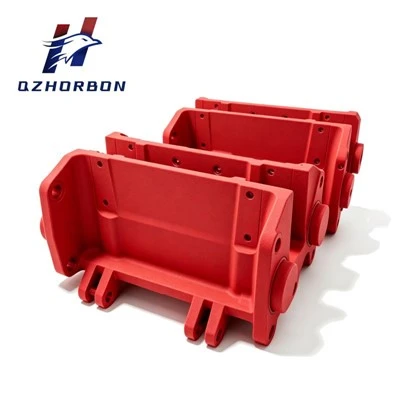
If you’re dealing with a counterweight that’s acting up, need a replacement that’s actually made right, or just have a question about maintenance, hit me up. I don’t do generic sales pitches— I’ve been where you are, working 12-hour days, dealing with breakdowns that cost you money. I’ll hook you up with the right part, give you straight advice, no B.S. Let’s get your crusher running without all the extra headaches.
Crusher Side Plate REFERENCES
- Construction Equipment Maintenance Association. Best Practices for Heavy-Duty Crusher Component Upkeep. 2022.
- Miller, J. Industrial Counterweight Durability and Maintenance Protocols. Journal of Heavy Equipment Operations, vol. 14, no. 3, 2021, pp. 45-52.
- Occupational Safety and Health Administration (OSHA). Lockout/Tagout Standards for Heavy Industrial Equipment. 2020.
- Granite Mining and Processing Association. Crusher Balance Requirements for Aggregate Production. 2023.
Quzhou Horbon Mining Parts Co., Ltd.
Quzhou Horbon Mining Parts Co., Ltd. is one of the most professional crusher counterweights manufacturers and suppliers in China, featured by high quality customized service and OEM service. Please rest assured to buy premium crusher counterweights at competitive price from our factory. Contact us for pricelist.
Address: No.8 Nanshan Road, Qujiang District, Quzhou City, Zhejiang Province, China
E-mail: horbonmining@gmail.com
WebSite: https://www.horbonmachinery.com/
