If you’ve ever walked through a home goods store, ran a finger over the label on a new bedsheet, or bought a piece of outdoor gear, you’ve probably glanced at a tiny, easy-to-miss line that says “meets flammability standards.” That line isn’t just a regulatory box to check—it’s a promise that the fabric you’re using won’t ignite or spread fire faster than acceptable limits. As a supplier of Fabric Flammability Testers, I get asked this question more than any other: “What is the detection limit of a Fabric Flammability Tester?” It’s not a one-sentence answer, and getting it right is the difference between a tester that helps manufacturers stay safe and compliant, and one that gives misleading data that could lead to dangerous products ending up on shelves. Fabric Flammability Tester
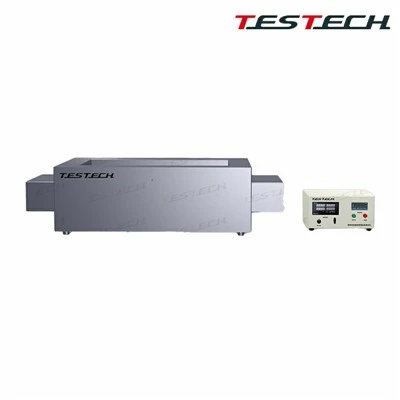
First, let’s cut through the confusion between two terms people often mix up: the “detection limit” and the “pass/fail threshold” for fabric flammability. The pass/fail threshold is set by global regulatory bodies like the Consumer Product Safety Commission (CPSC) in the U.S., the European Committee for Standardization (CEN) in the EU, or the International Organization for Standardization (ISO). For example, CPSC 16 CFR Part 1610, which covers clothing fabrics, sets a limit that after a 12-second flame exposure, the fabric’s burn time can’t exceed 7 seconds for most apparel. That’s the line between safe and non-compliant. The detection limit, on the other hand, is the smallest change in a fabric’s flammability that the tester itself can measure accurately. It’s not a rule—it’s a technical specification that tells you how reliable your tester’s readings are, regardless of the regulatory standard you’re following.
Let’s get specific about how Fabric Flammability Testers work, because that’s where the detection limit comes from. Most testers use a standardized flame (usually a 1.5 cm propane flame, adjusted to exact height and heat output per ASTM D1230, the standard test method for flammability of apparel and other textiles) applied to a fabric sample of a fixed size, cut in a specific grain (either warp or weft, per test requirements). The tester then tracks four key metrics: time to ignition (how long it takes the fabric to catch fire after the flame touches it), after-flame time (how long it keeps burning after the flame is removed), after-glow time (how long it smolders after the flame is gone, a often-overlooked metric that’s critical for indoor fabrics), and burn distance (how far the flame travels across the fabric sample).
The detection limit for each of these metrics is different, because each is measured with a different part of the tester. For time-based metrics (ignition, after-flame, after-glow), detection limit is tied to the tester’s timer precision. Most modern Fabric Flammability Testers use digital timers, not analog clocks, so the standard timer precision is 0.01 seconds. That means the smallest time difference the tester can reliably measure is 0.01 seconds. That might seem trivial—until you test a fabric that only has a 0.5-second after-flame time, right on the edge of a regulatory limit. A tester with a 0.1-second detection limit will give you a clear, consistent reading; one with a 1-second detection limit might round that 0.5-second burn up to 1 second, or down to 0, leading to a wrong pass/fail call.
For burn distance, the detection limit is tied to the tester’s sample fixture and measurement system. Manual testers (where a technician marks the sample with a pencil before the test) have a detection limit of about 5 mm, because human eyes can only estimate that small a distance accurately. Automatic testers, which use cameras and computer vision to track flame movement, have a much lower detection limit—usually 1 mm, because the camera can pick up tiny shifts in the flame front that a human eye misses. That’s a big deal for high-performance fabrics used in firefighter gear or aerospace, where a 3 mm difference in burn distance could mean the difference between a vest that protects the wearer for 10 seconds and one that fails after 7 seconds.
Now, it’s important to note that the detection limit of a Fabric Flammability Tester isn’t a fixed number—there are a lot of factors that can shift it, even for the same tester. The first is calibration. Every tester needs to be calibrated regularly, usually every 6 months per regulatory requirements, to make sure the flame height is correct, the gas flow is steady, and the timer is synchronized. I’ve seen brand-new testers leave the factory with a flame that’s 1 mm too short, which might seem small, but that can lower the detection limit for ignition time by several tenths of a second. If you don’t calibrate your tester, you’re not just working with an unknown detection limit—you’re working with inaccurate data that could get your product recalled.
The second factor is the fabric itself. A Fabric Flammability Tester’s detection limit is tested on standard reference materials, not on every fabric you might test. For example, an uncoated cotton fabric will have a much different burn profile than a polyester-cotton blend with a flame-retardant (FR) coating. FR-treated fabrics often have after-flame times of less than 1 second, so a tester designed for uncoated cotton might not have a low enough detection limit to measure those fast burn times accurately. That’s why we always recommend that customers test their target fabric type with a demo unit before buying—what works for apparel might not work for upholstery, and what works for uncoated fabrics might not work for FR treatments.
Another common misconception: a lower detection limit is always better. For most apparel and upholstery testing, a detection limit of 0.01 seconds for time metrics and 1 mm for burn distance is more than sufficient. Spending extra on a tester with a 0.001-second detection limit might seem like a good idea, but it adds unnecessary cost and complexity for 90% of manufacturers. The goal isn’t to get the smallest possible detection limit—it’s to get a detection limit that’s appropriate for your use case and the regulatory standards you need to meet. For example, if you’re testing children’s sleepwear, which has a stricter CPSC limit of 0 seconds after-flame time (meaning it can’t ignite at all), you need a tester with a detection limit low enough to confirm that the fabric doesn’t burn for even a fraction of a second. A tester with a 0.1-second detection limit might call a fabric that burns for 0.05 seconds a “pass,” which is a dangerous error.
I’ve seen this play out with a customer a few years back: a small clothing manufacturer that made kids’ pajamas bought a cheap, used Fabric Flammability Tester from an online auction. They thought it was a good deal, but within six months, they got a CPSC recall notice for 10,000 pairs of pajamas. When we tested their tester, we found that its timer had a 1-second detection limit, not the 0.01 seconds the manufacturer thought it had. A batch of pajamas that had after-flame times of 0.8 seconds were being recorded as 0 seconds, because the tester rounded the time up to the nearest whole second. That’s why we always emphasize that detection limit isn’t just a technical spec—it’s a safety spec.
So, how do you confirm the detection limit of a Fabric Flammability Tester? It’s not something you can guess from the product description. Reputable suppliers like us test every unit before it leaves the factory, using standard reference materials from organizations like the National Institute of Standards and Technology (NIST). We provide a calibration certificate for every tester that lists the detection limit for all key metrics, so customers know exactly what they’re working with. For example, our standard Fabric Flammability Testers have a 0.01-second time detection limit and 1 mm burn distance detection limit, which meets all global regulatory requirements for apparel, upholstery, and bedding. Our high-precision models, designed for FR fabric manufacturers, have a 0.001-second time detection limit and 0.5 mm burn distance detection limit, for customers testing specialized products like firefighter gear or aerospace fabrics.
It’s also important to distinguish between the detection limit and the limit of quantitation (LOQ) for the tester. The LOQ is the lowest level of a flammability property that the tester can measure with acceptable accuracy and precision. For example, if a tester’s detection limit is 0.01 seconds, its LOQ might be 0.05 seconds, meaning it can reliably measure burn times down to 0.05 seconds, but times below that are too fast to measure accurately. That’s a critical point for manufacturers working with FR fabrics, because if their product’s after-flame time is below the LOQ, the tester can’t tell the difference between a fabric that burns for 0.02 seconds and one that doesn’t burn at all—so you might need additional testing to confirm compliance.
At the end of the day, the detection limit of a Fabric Flammability Tester is all about trust. When you’re testing fabrics that will be used in homes, on bodies, and in critical industries, you need to trust that your tester’s readings are accurate. That means knowing exactly what your tester’s detection limit is, calibrating it regularly, and choosing a tester that’s designed for the specific fabrics and standards you work with.
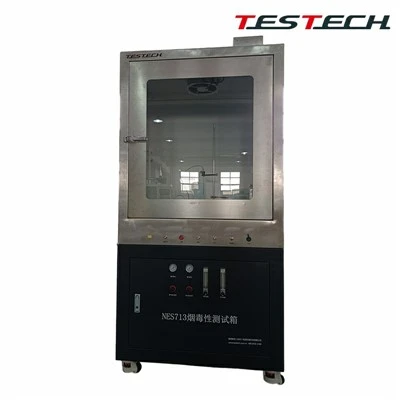
If you’re in the market for a Fabric Flammability Tester, or you’re looking to test your current unit to confirm its detection limit, we’re here to help. Our team has years of experience working with textile manufacturers, regulatory labs, and safety organizations, and we can walk you through exactly what detection limit you need for your products, demo our testers with your own fabric samples, and provide all the calibration and support you need to stay compliant. Don’t take chances with inaccurate testing—reach out today to discuss your needs.
Universal Fire Tester References
ASTM International. ASTM D1230-21: Standard Test Method for Flammability of Apparel and Other Textiles. ASTM International, 2021.
Consumer Product Safety Commission. 16 CFR Part 1610: Standard for the Flammability of Clothing Textiles. U.S. Government Publishing Office, 2023.
International Organization for Standardization. ISO 6940:2021: Textiles – Burning behaviour – Test for flammability of vertically oriented specimens. ISO, 2021.
National Institute of Standards and Technology. NIST Standard Reference Material 2910: Flammability of Textiles for Apparel. NIST, 2019.
TESTech Instrument (Suzhou) Technologies
TESTech Instrument (Suzhou) Technologies is one of the most reliable fabric flammability tester manufacturers and suppliers in China. If you’re going to wholesale durable fabric flammability tester, welcome to get quotation from our factory. For price consultation, contact us.
Address: 8/F, R&D and Production Workshop No. 5, Jiangsu Guoqian Technology Innovation Industrial Park, 168 Lüliangshan Road, Huqiu District, Suzhou, Jiangsu Province, China
E-mail: sales@testech.com.cn
WebSite: https://www.testechfiretest.com/
