When it comes to operating a CNC centerless grinder, choosing the right grinding wheel is as crucial as selecting the right tool for any specialized task. As a supplier of CNC centerless grinders, I’ve witnessed firsthand how the appropriate selection of a grinding wheel can significantly enhance the efficiency, precision, and overall performance of the grinding process. In this blog, I’ll share insights on how to select the appropriate grinding wheel for a CNC centerless grinder, drawing from my experience in the industry. CNC Centerless Grinder

Understanding the Basics of Grinding Wheels
Before delving into the selection process, it’s essential to understand the basic components of a grinding wheel. A grinding wheel consists of abrasive grains, a bonding material, and pores. The abrasive grains are responsible for cutting and removing material from the workpiece. The bonding material holds the abrasive grains together, and the pores provide space for chips and coolant to flow, preventing the wheel from loading up and overheating.
The performance of a grinding wheel is largely determined by its abrasive type, grain size, grade, structure, and bond type. Each of these factors plays a unique role in the grinding process, and understanding them is essential for selecting the right wheel for your specific application.
Abrasive Type
The abrasive type is one of the most critical factors to consider when selecting a grinding wheel. Different abrasive materials have different properties, such as hardness, toughness, and cutting ability, which make them suitable for different types of workpieces and grinding applications.
- Aluminum Oxide (Al₂O₃): Aluminum oxide is a common and versatile abrasive material. It is relatively hard and tough, making it suitable for grinding a wide range of materials, including carbon steel, alloy steel, and cast iron. Aluminum oxide abrasives are known for their self – sharpening properties, which means they can maintain their cutting ability over a long period.
- Silicon Carbide (SiC): Silicon carbide is a harder and more brittle abrasive than aluminum oxide. It is particularly effective for grinding non – ferrous metals, such as aluminum, copper, and brass, as well as hard and brittle materials like ceramics and glass. Silicon carbide abrasives have a high thermal conductivity, which helps to dissipate heat during grinding, reducing the risk of workpiece damage.
- Cubic Boron Nitride (CBN): CBN is a synthetic abrasive that is second only to diamond in hardness. It is extremely hard, tough, and heat – resistant, making it ideal for grinding hard and high – strength materials, such as hardened steel, tool steel, and superalloys. CBN wheels can achieve high material removal rates and excellent surface finishes, but they are also more expensive than other abrasive types.
- Diamond: Diamond is the hardest known material, and diamond abrasives are used for grinding extremely hard materials, such as carbide, ceramics, and glass. Diamond wheels can provide precise and efficient grinding, but they are also the most expensive option.
Grain Size
The grain size of a grinding wheel refers to the size of the individual abrasive grains. The grain size affects the material removal rate, surface finish, and power consumption of the grinding process.
- Coarse Grain (16 – 60 grit): Coarse – grained wheels have larger abrasive grains, which are capable of removing material quickly. They are suitable for rough grinding operations, where the goal is to remove a large amount of material from the workpiece in a short time. However, coarse – grained wheels tend to produce a rough surface finish.
- Medium Grain (60 – 120 grit): Medium – grained wheels strike a balance between material removal rate and surface finish. They are commonly used for semi – finish grinding operations, where a moderate amount of material needs to be removed while achieving a relatively smooth surface finish.
- Fine Grain (120 – 220 grit): Fine – grained wheels have smaller abrasive grains, which are capable of producing a smooth surface finish. They are used for finish grinding operations, where the final surface quality of the workpiece is critical. However, fine – grained wheels have a lower material removal rate compared to coarse – and medium – grained wheels.
- Very Fine Grain (220+ grit): Very fine – grained wheels are used for precision grinding operations, such as optical lens grinding and superfinishing. They can produce extremely smooth surface finishes, but they are also very slow and require careful control of the grinding process.
Grade
The grade of a grinding wheel refers to the strength of the bond that holds the abrasive grains together. It indicates how tightly the abrasive grains are held in the wheel and how easily they will be released during grinding.
- Soft Grade: Soft – grade wheels have a weaker bond, which allows the abrasive grains to be released more easily. They are suitable for grinding hard materials, as the worn grains can be replaced quickly, maintaining the cutting ability of the wheel. Soft – grade wheels are also less likely to cause thermal damage to the workpiece.
- Medium Grade: Medium – grade wheels are a good all – around choice for a wide range of grinding applications. They offer a balance between the ability to hold the abrasive grains and the ability to release them when they become worn.
- Hard Grade: Hard – grade wheels have a stronger bond, which holds the abrasive grains more firmly. They are suitable for grinding soft materials, as the grains are less likely to be pulled out prematurely. Hard – grade wheels can also be used for grinding with light pressure and high – precision operations.
Structure
The structure of a grinding wheel refers to the spacing between the abrasive grains. It affects the chip – holding capacity, coolant flow, and grinding efficiency of the wheel.
- Open Structure: Wheels with an open structure have a large amount of space between the abrasive grains. They are suitable for grinding soft and ductile materials, as the open spaces allow chips to be easily removed from the wheel, preventing loading. Open – structured wheels also have better coolant flow, which helps to reduce heat generation during grinding.
- Dense Structure: Dense – structured wheels have a smaller amount of space between the abrasive grains. They are suitable for grinding hard and brittle materials, as the closer spacing of the grains provides more cutting edges, allowing for better precision and control.
Bond Type
The bond type of a grinding wheel refers to the material used to hold the abrasive grains together. Different bond types have different properties, such as strength, hardness, and heat resistance, which make them suitable for different grinding applications.
- Vitrified Bond: Vitrified bond is the most common bond type for grinding wheels. It is made from ceramic materials and offers a good balance of strength, hardness, and heat resistance. Vitrified – bonded wheels are suitable for a wide range of grinding applications, including rough grinding, semi – finish grinding, and finish grinding.
- Resinoid Bond: Resinoid bond is a synthetic organic bond that is known for its high strength and flexibility. Resinoid – bonded wheels are suitable for high – speed grinding operations and for grinding materials that require a good surface finish. They are also less likely to cause thermal damage to the workpiece.
- Silicate Bond: Silicate bond is a relatively weak bond that is used for applications where the wheel needs to break down quickly. Silicate – bonded wheels are often used for grinding materials that are prone to cracking or thermal damage.
- Metal Bond: Metal bond is a strong and durable bond that is used for grinding hard and abrasive materials, such as carbide and ceramics. Metal – bonded wheels can provide high material removal rates and long wheel life, but they are also more difficult to dress and true.
Matching the Grinding Wheel to the Workpiece
In addition to considering the properties of the grinding wheel, it’s also important to match the wheel to the specific requirements of the workpiece. Here are some key factors to consider:
- Material of the Workpiece: As mentioned earlier, different abrasive types are suitable for different workpiece materials. For example, aluminum oxide is a good choice for grinding steel, while silicon carbide is better for non – ferrous metals and ceramics.
- Hardness of the Workpiece: The hardness of the workpiece affects the selection of the wheel grade. Harder workpieces require softer – grade wheels to prevent the wheel from becoming dull too quickly, while softer workpieces require harder – grade wheels to maintain the cutting ability of the wheel.
- Surface Finish Requirements: If the workpiece requires a high – quality surface finish, a fine – grained wheel with a suitable bond type should be selected. For rough grinding operations, a coarse – grained wheel can be used to remove material quickly.
- Grinding Operation: Different grinding operations, such as external grinding, internal grinding, and surface grinding, may require different types of grinding wheels. For example, internal grinding operations often require wheels with a small diameter and a narrow width.
Testing and Evaluation
Even with a thorough understanding of the factors involved in grinding wheel selection, it’s often necessary to conduct testing and evaluation to determine the most suitable wheel for a specific application. This may involve trying out different wheels on a sample workpiece and measuring the results in terms of material removal rate, surface finish, and wheel wear.
During the testing process, it’s important to keep detailed records of the grinding parameters, such as wheel speed, feed rate, and depth of cut, as well as the performance of the wheel. This information can be used to optimize the grinding process and select the best wheel for production use.
Conclusion
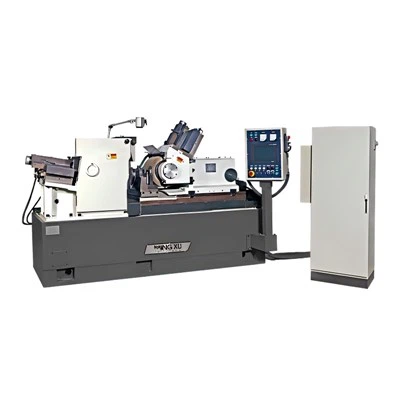
Selecting the appropriate grinding wheel for a CNC centerless grinder is a complex process that requires a thorough understanding of the properties of the grinding wheel, the requirements of the workpiece, and the specific grinding operation. By considering factors such as abrasive type, grain size, grade, structure, bond type, and matching the wheel to the workpiece, you can ensure that your CNC centerless grinder operates at its highest efficiency and precision.
Surface Grinding Machine If you’re in the market for a CNC centerless grinder or need advice on selecting the right grinding wheel for your application, I encourage you to contact me. I’m here to help you make the best choices for your grinding needs and ensure that you achieve the best results from your investment.
References
- Kremer, R. (2018). Handbook of Abrasive Technology. Industrial Press.
- Trent, E. M., & Wright, P. K. (2000). Metal Cutting. Butterworth – Heinemann.
- Stephenson, D. A., & Agapiou, J. S. (1997). Metal Cutting Theory and Practice. Marcel Dekker.
Wuxi Mingxu Machinery Equipment Co., Ltd.
As one of the most professional cnc centerless grinder manufacturers and suppliers in China, we’re featured by quality products and good price. Please rest assured to buy the best cnc centerless grinder for sale here from our factory. Also, custom service is available.
Address: No. 5-5 Jinke Wealth Plaza, Changjiang North Road, Xinwu District, Wuxi City, Jiangsu Province
E-mail: yingyingmxjd@163.com
WebSite: https://www.mingxu-china.com/
